

Home Rehab Exercises
Support your progress between visits with guided exercises from The Chiropractic Spa.
These home rehabilitation programs are designed to complement your care by helping improve mobility, posture, strength, and movement patterns. Each program includes step-by-step instructions and video demonstrations from our doctors so you can perform your exercises correctly at home.
Please select the program recommended by your doctor below.
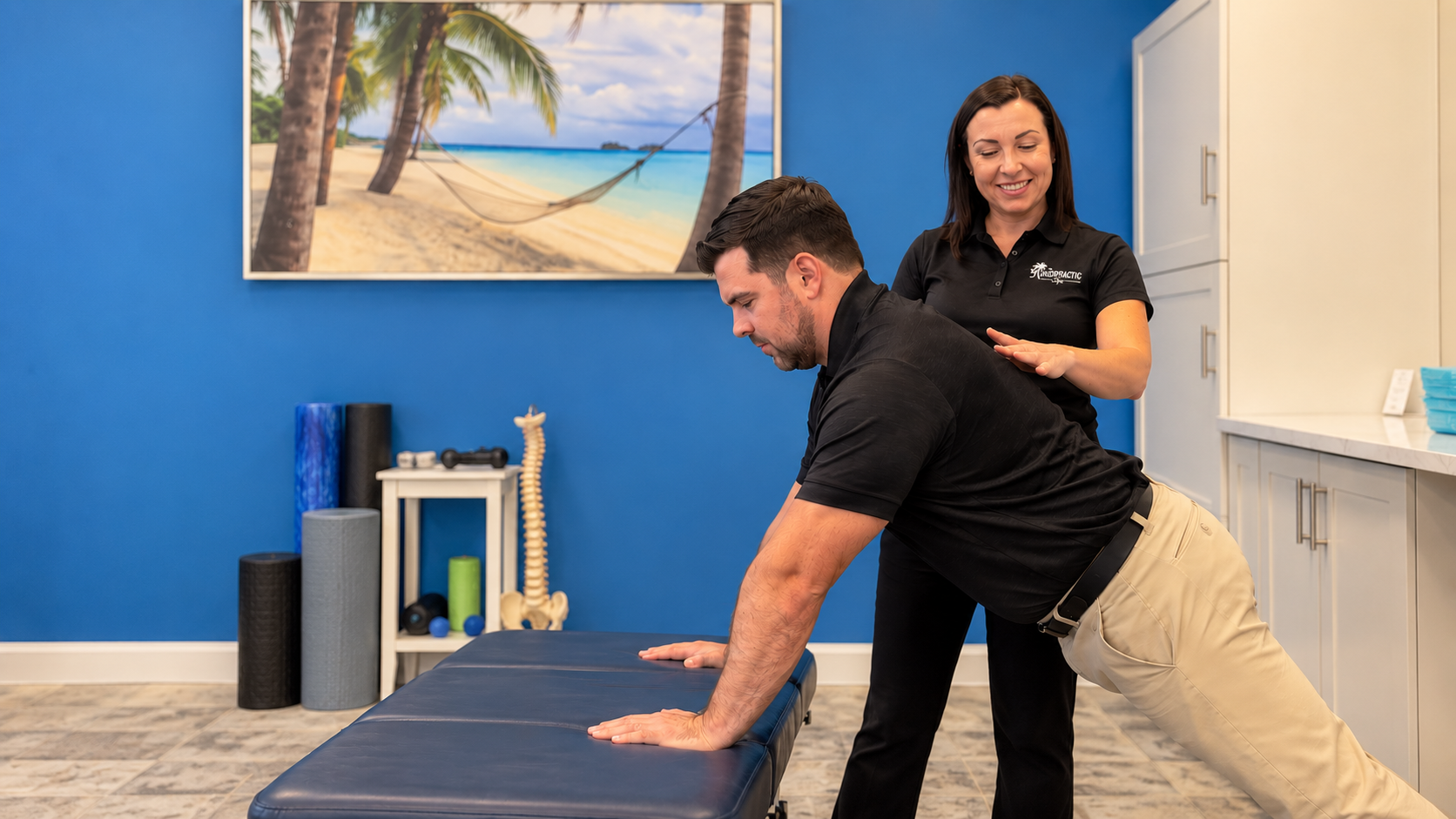
Upper Cross Syndrome Home Rehab Exercises
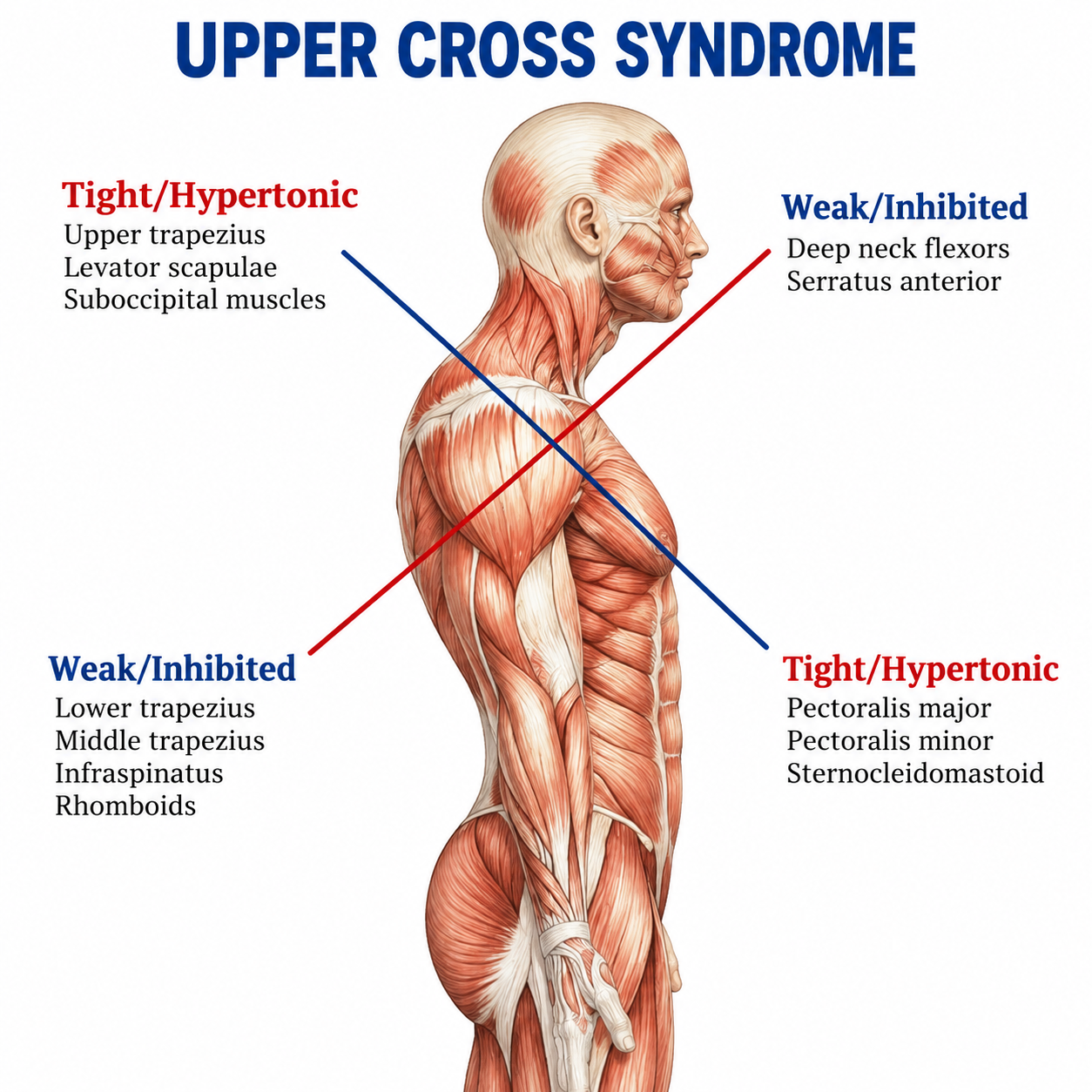
What Is Upper Cross Syndrome?
Upper Cross Syndrome is a common muscle imbalance involving the neck, shoulders, chest, and upper back, often associated with forward head posture and rounded shoulders. Tight or overactive muscles in the chest, neck, and upper shoulders combined with weaker postural muscles can affect how the neck and shoulders move and function.
This pattern may contribute to neck pain, shoulder pain, headaches, upper-back tension, pain or tingling into the arms, and restricted neck or shoulder range of motion. These exercises are designed to improve mobility, stretch commonly tight muscles, and strengthen the muscles that support better posture and movement.
Chin Tucks
For Anterior Head Carriage
Purpose: Strengthens the deep cervical flexors and corrects forward head posture.
Instructions: Sit or stand up straight with your shoulders relaxed. Slowly draw your chin straight back, as if you’re trying to create a double chin. Hold for 5–10 seconds, then relax. Repeat for 10 repetitions.
Frequency: 2–3 times per day
Upper Trapezius Stretch
For Shoulder and Neck Tension
Purpose: Relieves tension in the upper trapezius, common in patients with Upper Cross Syndrome.
Instructions: Sit or stand up straight. Gently tilt your head to the left, bringing your left ear toward your left shoulder. Use your left hand to gently apply pressure to the right side of your head for a deeper stretch. Hold for 20–30 seconds, then repeat on the other side. Repeat 2–3 times on each side.
Frequency: 2–3 times per day
Chest Stretch
For Tight Pectoral Muscles
Purpose: Helps open up the chest and shoulders, reducing tightness in the pectoral muscles that contribute to Upper Cross Syndrome and can block lymphatic flow in the body.
Instructions: Stand next to a door frame with your feet hip-width apart. Place your right arm at a 90-degree angle (elbow bent) against the door frame, with your forearm and palm resting on the frame. Take a small step forward with your right leg, keeping your left leg slightly behind for stability. Your shoulder should be in line with the door frame. Gently lean your body forward, allowing your chest to stretch. Hold for 20–30 seconds, breathing deeply and relaxing into the stretch.
Switch sides and repeat with your left arm against the door frame.
Frequency: 2–3 times per day
Bruegger's Posture Exercise with a Band
For Posture Correction
Purpose: Strengthens the muscles of the upper back and shoulders to counteract the effects of slouched posture.
Instructions: Sit at the edge of a chair with your feet flat on the floor. Hold a resistance band with both hands, palms facing upward, and place your hands by your sides. Gently pull the band apart while rotating your arms outward, opening up your chest. Squeeze your shoulder blades together and lift your chest. Hold the position for 5–10 seconds, then slowly release. Repeat for 10 repetitions.
Frequency: 1–2 times per day